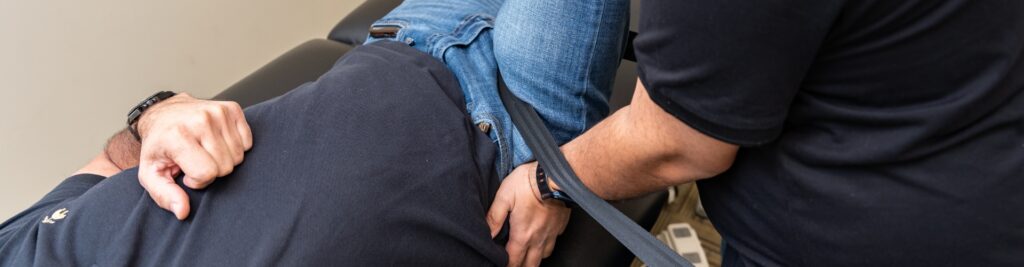
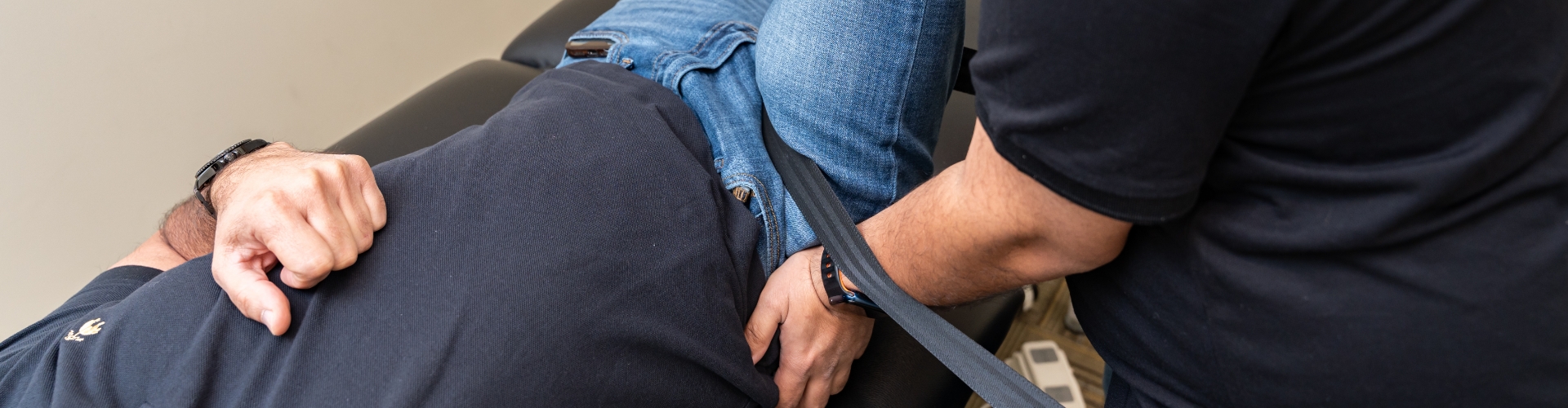
When Hip or Knee Pain Starts Affecting How You Move
Hip or knee discomfort can change how you walk, climb stairs, or get in and out of a chair. Many people notice these changes gradually, only to seek hip and knee pain relief in Maple Ridge, BC when daily activities start to feel limited or uncomfortable. At Haney Physiotherapy, our care team addresses hip and knee dysfunction through physiotherapy that focuses on restoring strength, mobility, and control throughout the lower body.
The hip and knee work together with the pelvis, spine, and ankle and foot to support standing, walking, and balance. When one area loses strength or mobility, other joints often absorb extra stress. Physiotherapy addresses these movement patterns to support better function and confidence.
How the Hip and Knee Are Designed to Work Together
The hip is a deep ball-and-socket joint that provides stability and power during walking and lifting. The knee allows bending and straightening while helping to absorb forces from the ground. Muscles around the hips, thighs, and lower legs guide movement and protect the joints during daily activity.
Efficient movement depends on coordination between these structures. Limited hip mobility can increase stress on the knee, while weakness around the knee can change how forces travel up and down through the leg. This shared anatomy explains why discomfort often appears in both joints. Physiotherapy for hip and knee pain focuses on improving how these joints function as part of a connected system.
Common Factors That Contribute to Hip and Knee Pain
Hip and knee discomfort can develop from a range of daily demands and activity changes, including:
- Reduced strength in the hips or thighs
- Limited joint mobility that affects movement patterns
- Repetitive stress from work or sport
- Changes in walking or running mechanics
- Previous injuries that altered movement habits
- Sudden increases in activity level or load
Symptoms People Often Notice With Hip and Knee Issues
People with hip or knee pain may report symptoms such as:
- Pain during walking, stair use, or rising from a chair
- Stiffness the first thing in the morning or after sitting
- Reduced range of motion at the hip or knee
- Weakness or instability during weight-bearing tasks
- Discomfort that increases with prolonged activity
- Difficulty returning to recreational or fitness activities
Physiotherapy Techniques Used for Hip and Knee Pain Treatment
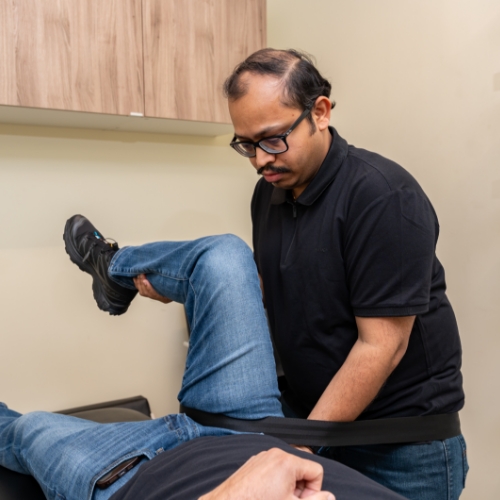
When it comes to hip and knee pain treatment, the team at Haney Physiotherapy focuses on restoring movement quality and improving tolerance for daily activities. We accomplish this through a combination of hands-on care and guided exercise, including:
- Manual therapy to improve joint and soft tissue mobility
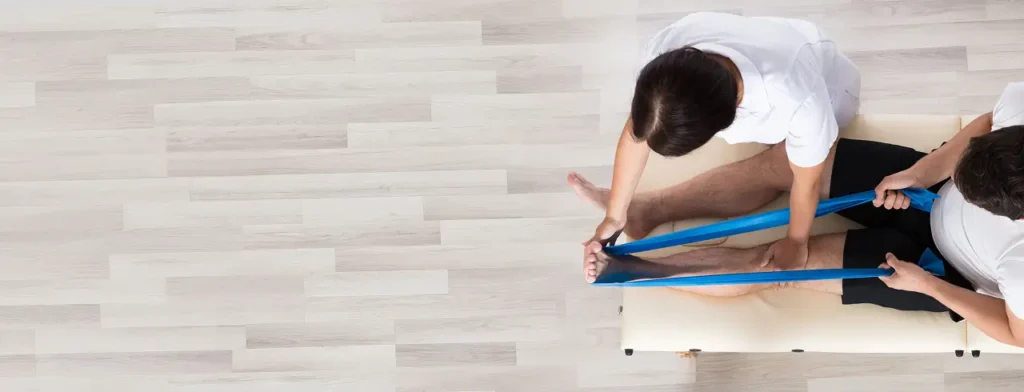
- Strengthening exercises for the hips, thighs, and lower legs
- Movement retraining to improve walking and functional tasks
- Balance and control exercises to support joint stability
- Activity guidance to manage load and progression
- Education on posture and movement habits
Frequently Asked Questions
Can physiotherapy help hip and knee pain related to daily wear and tear?
Is physiotherapy helpful after a hip or knee injury?
Do I need imaging before starting physiotherapy for hip or knee pain?
Why Physiotherapy Matters for Long-Term Movement
Hip and knee pain often reflects how joints respond to repeated load over time. That’s why our team always starts by examining how strength, mobility, and movement patterns influence joint stress. Improving these factors helps reduce irritation and supports better movement efficiency.
Physiotherapy for hip and knee pain also provides practical strategies for managing activity, pacing exercise, and building confidence with movement. This approach supports long-term improvement and helps people return to daily and recreational activities safely.
Take the Next Step Toward Comfortable Movement
Hip and knee pain can limit independence and quality of life. Physiotherapy at Haney Physiotherapyoffers a structured approach to improving movement, strength, and confidence.
Your Next Steps…
- Request An Appointment
- Receive A Custom Treatment Plan
- Work Hard and Progress In Your Recovery
- Recover & Enjoy Life Pain-Free